

QUANTUM SCANNING TIPS
Most advanced probes for scanning NV magnetometry. Fully characterized and ready to use.
Bright. Sensitive. Coherent.
The diamond probe built for NV scanning
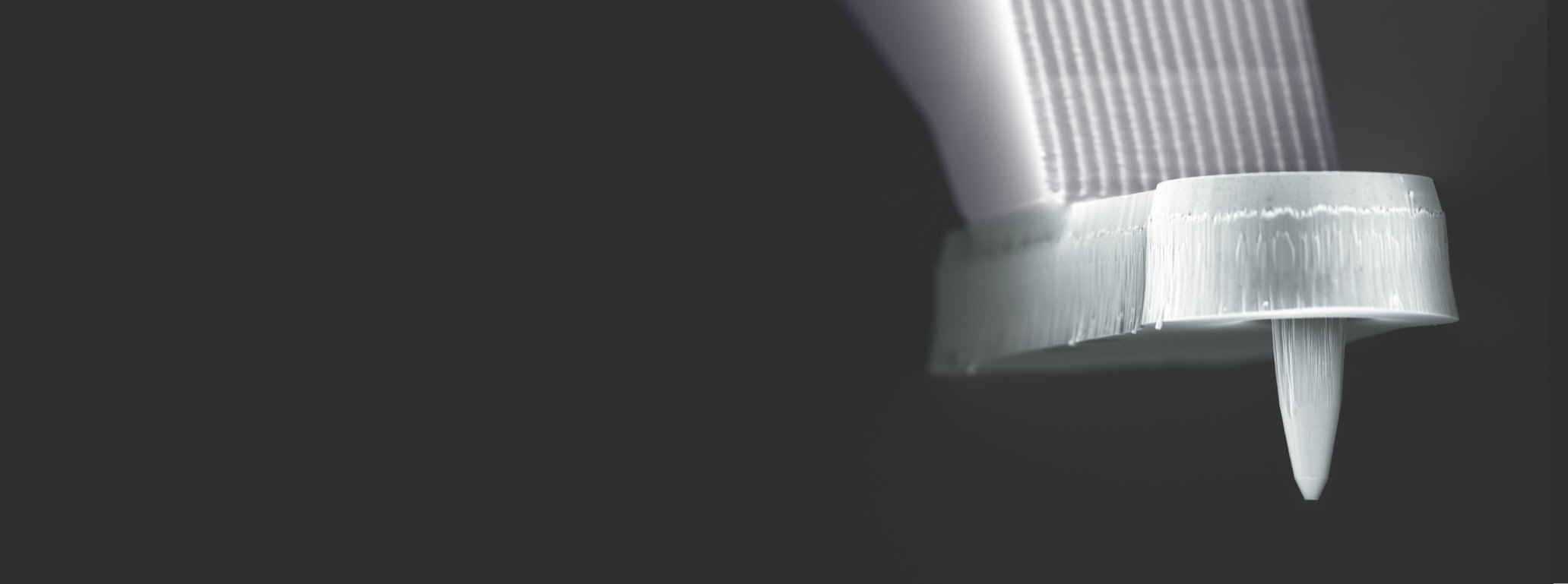
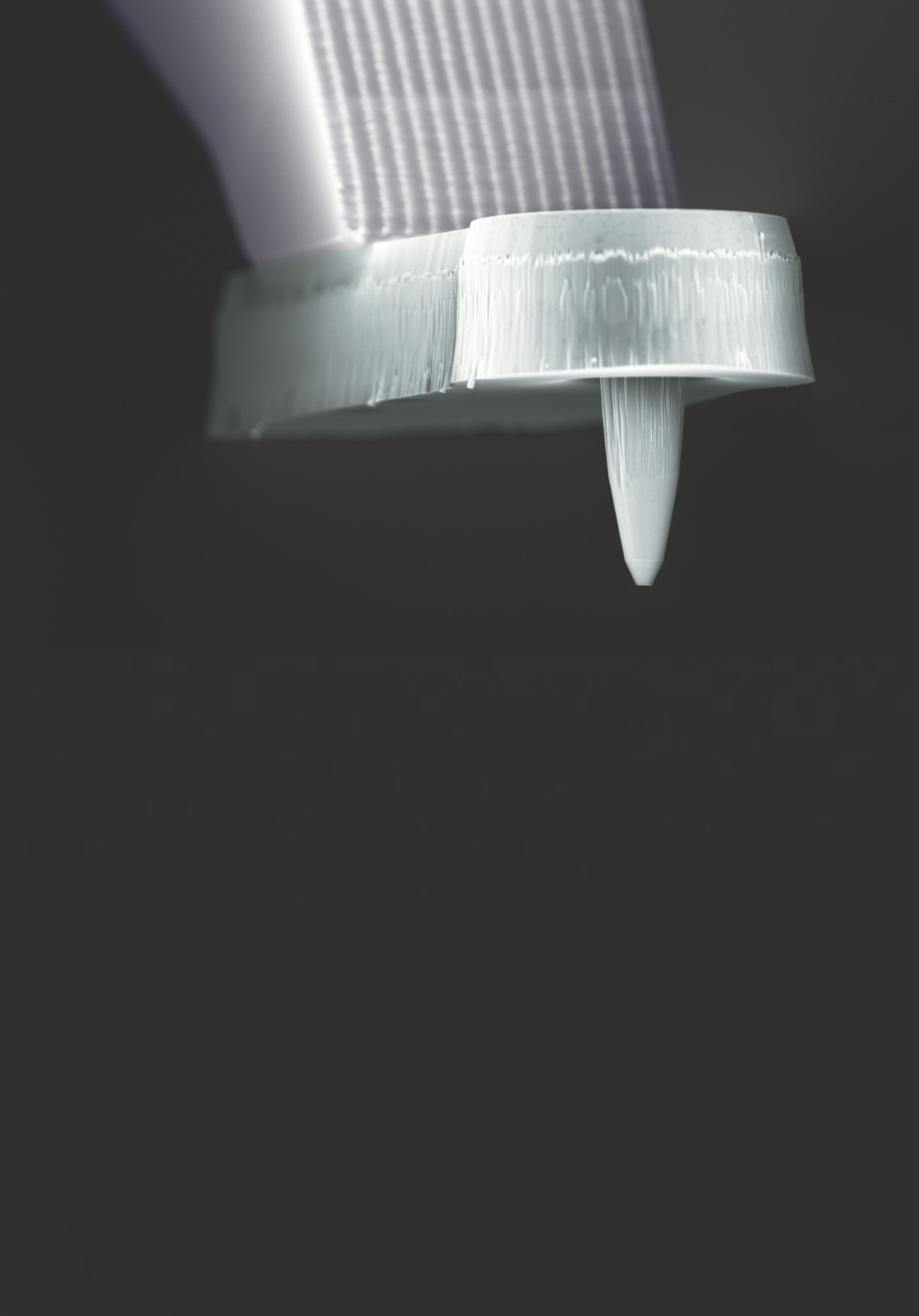
The Quantum Scanning Tip (QST) is a fully integrated, plug-and-play sensor chip built around a single nitrogen-vacancy (NV) center in diamond. A single NV sits at the apex of a diamond tip, just ~10 nm from the surface, mounted on a tuning fork for AFM-compatible force feedback, and assembled on a ceramic chip carrier for easy handling. Drop it into your setup and start measuring.
Every tip is individually characterized and ships with a full datasheet. You know your sensor before you scan, without guesswork.


Technical specifications
Configure QSTs for your experiment
No two experiments are alike, so our scanning tips come in a range of configurations to match your exact setup and requirements. Every tip is rigorously characterized using our Quantum Confocal Microscope (QCFM), providing key parameters including ODMR contrast and brightness, saturation count rate, NV orientation, T1 and T2 coherence times, and hyperfine structure spectroscopy. Visit the store to configure your QST and explore all available options.

Sensitivity
From AFM-only tips to our most sensitive probes (<1.5 µT/√Hz), graded and guaranteed. Hyperfine splitting resolved from Q4 upwards.

NV axis orientation
NV magnetic field measurements are always projected onto the NV axis, which depends on the diamond crystal orientation. Our standard tips use the widely available ⟨100⟩ cut, placing NV centers at 54.7° relative to the surface normal.
For specialized applications, we also offer tips with in-plane ⟨110⟩ and out-of-plane ⟨111⟩ NV orientations, ideal for measurements requiring a magnetic bias field or minimizing directional sensitivity.

Integrated antenna
Our integrated probes feature a pre-aligned, microfabricated broadband antenna positioned for optimal NV excitation, no manual alignment needed. This saves setup time, simplifies tip exchange, and eliminates the risk of crashing a wire into your scanning tip. Ideal for space-constrained environments like cryo systems.
Two versions are available: a bare PCB with SMPM connectors (compatible with attoNVM), or a PCB mounted in a CNC housing for the QSM.

PCB carrier and tip orientation
Our diamond tips come on a plug-and-play sensor chip with a ceramic carrier, tuning fork, and diamond tip. Compatible with the Akiyama probe footprint, the slim design fits tight vertical spaces and is fully vacuum and cryo-compatible. Choose from two orientations, UP and DOWN, to suit your setup.
Double pillar tips
We also offer scanning tips with two optical outcoupling structures made of diamond, called double pillar tips, one of them with a single NV and one of them with multiple NVs. The second, multiple NV structure adds vector information about both the sample and bias magnetic field at a different point in space.
Higher coherence with isotopically pure C12 diamond
Measurement protocols that use pulse sequences can increase the sensitivity or detect parameters other than the magnetic field. The C13 spin bath in standard electronic grade diamond limits T2* to approximately 1 µs. For protocols that require a long T2*, we offer tips made from isotopically pure C12 diamond.
| NV Performance | |
| Contrast (at 10 MHz linewidth) | 15–27% (typical values) |
| Saturation count rate (0.75 NA) | 1.0–1.2 MCts/s |
| Brightness (at max. contrast) | 100–1,000 kcts/s |
| Nominal NV depth | ~10 nm |
| T₂ / T₂* (single Hahn echo / XY) | 4 / 1 µs (average values) |
| Nominal cw-ODMR sensitivity | 1–7 µT/(Hz1/2) |
| Sensitivity Classes | |
| Q1 – AFM only | N/A |
| Q2 | <7 µT/√Hz |
| Q3 | <4 µT/√Hz |
| Q4 | <3 µT/√Hz — hyperfine splitting resolved for Q4 and higher |
| Q5 | <2.3 µT/√Hz |
| Q6 | <1.9 µT/√Hz |
| Q7 | <1.7 µT/√Hz |
| Q8 | <1.5 µT/√Hz |
| Tip Configuration | |
| NV axis orientation | <100> standard (54.7° to normal), <110> in-plane, <111> out-of-plane |
| Tip orientation | UP or DOWN; custom tilt 0°, 3°, 5°, 10° available on request |
| Microwave antenna | Optional integrated broadband antenna; bare PCB (SMPM connectors) or CNC housing for QSM |
| Diamond purity | Standard electronic-grade or isotopically pure C12 diamond |
| Number of NV centers | Single, double, or multiple |
| Sensor Assembly | |
| Carrier | Ceramic chip carrier; Akiyama probe footprint compatible |
| Distance sensor | Tuning fork for AFM-compatible force feedback |
| Compatibility | Vacuum and cryo-compatible |
| Characterization | Every tip individually characterized; full datasheet included (contrast, brightness, count rate, NV orientation, T₂, hyperfine structure, linewidth, sensitivity) |
Which setup is right for you?
QSTs are designed to slot into your existing scanning probe setup. But if you're looking for a complete, turnkey solution, QZabre makes those too.
Already have a scanning probe setup?
QSTs are compatible with most AFM platforms. The chip carrier matches the Akiyama probe footprint, and the integrated antenna version removes the need for microwave alignment. Contact us if you want to verify compatibility with your setup.
Start measuring
Order online now
Our online store walks you through every configuration option, build exactly the probe you need and request a quote in minutes. Prefer to talk it through first? We're happy to advise, recommend a starting point, or send test samples.
For US customers: The double-pillar tip geometry is the available format from QZabre in the United States, covered by U.S. Pat. No. 8,415,640 licensed from Harvard University.
