
ANTIFERROMAGNETS
Why are they challenging to measure?
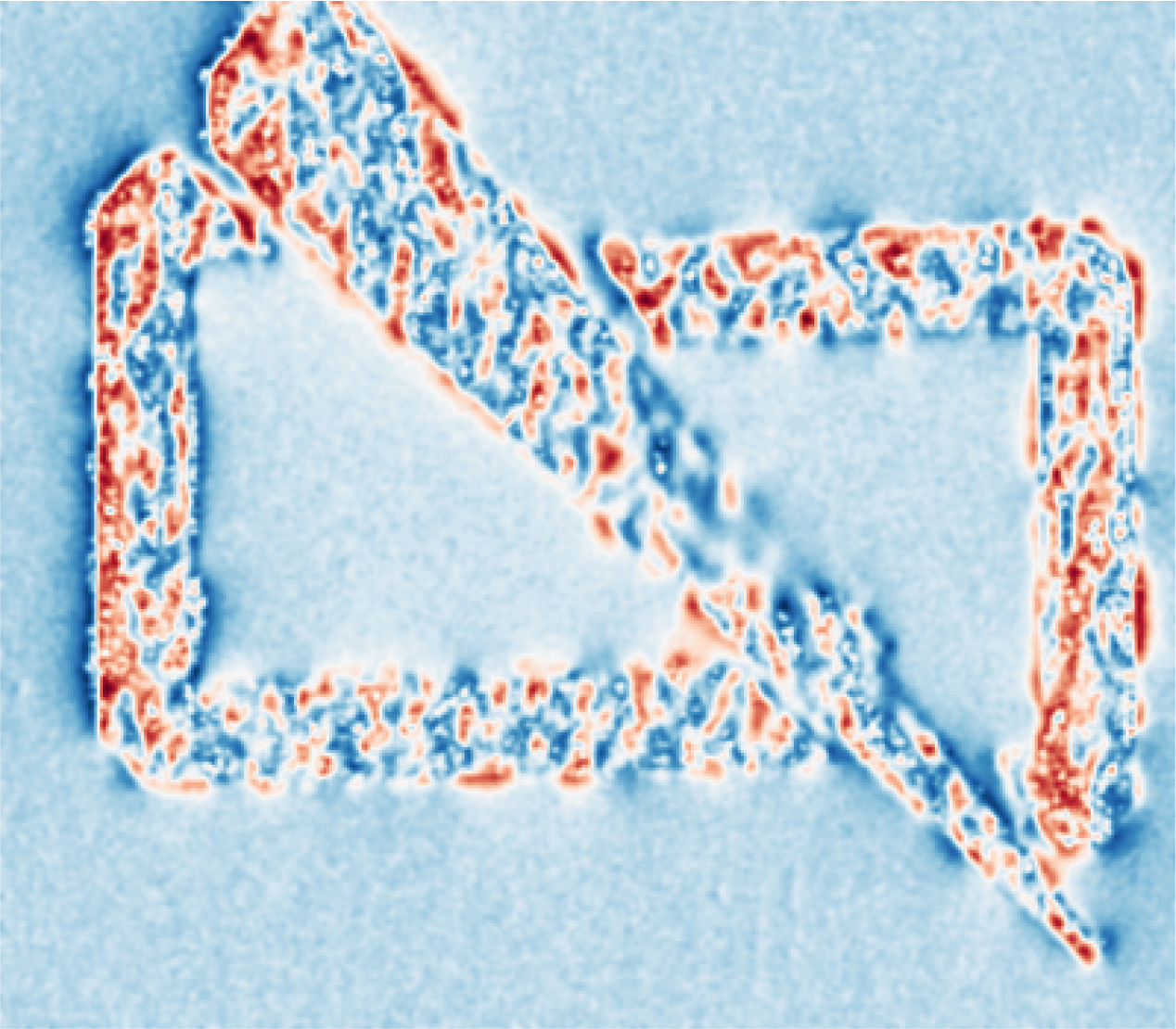
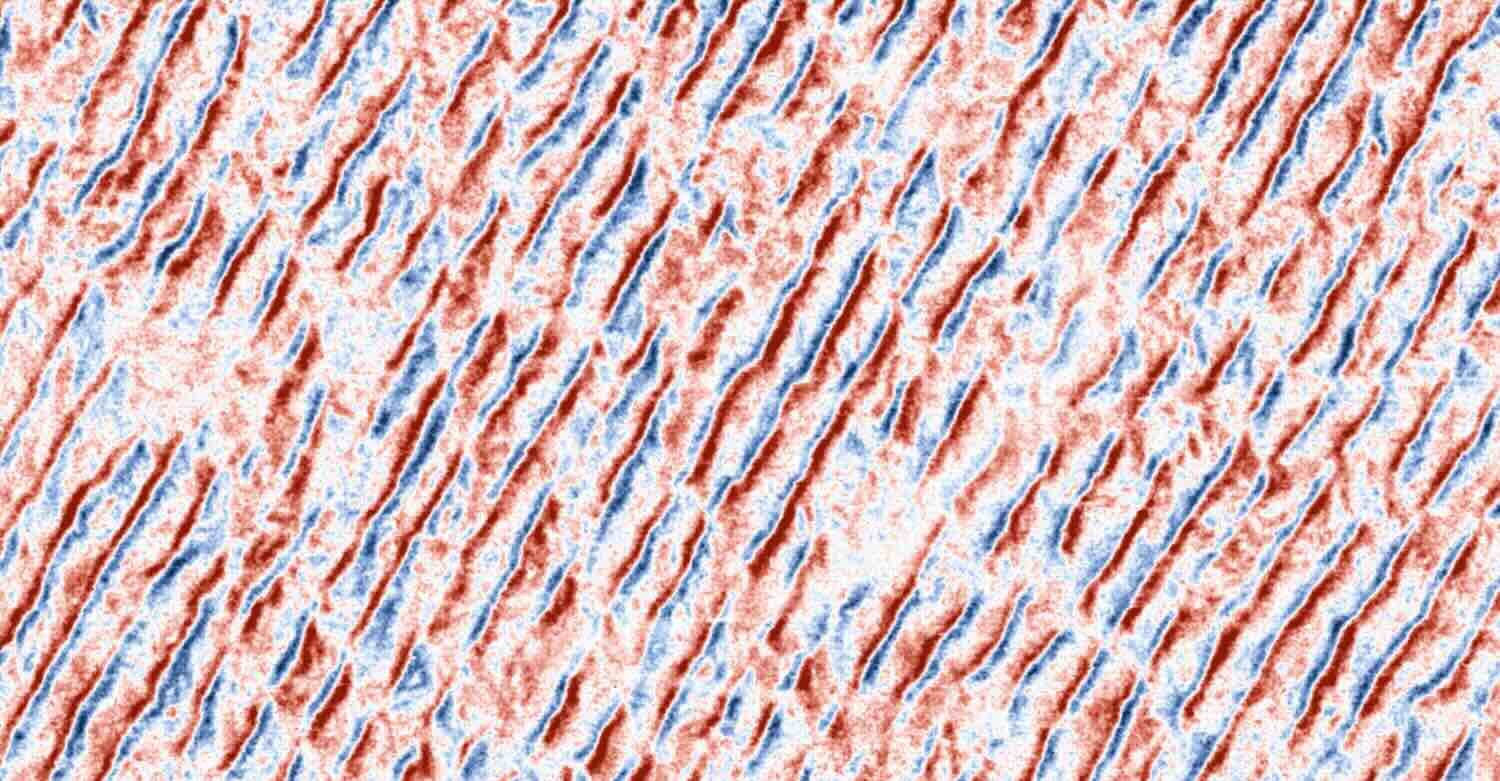
Because antiferromagnets generate extremely weak stray magnetic fields, they are difficult to characterize with conventional magnetic imaging techniques, which often lack sufficient sensitivity. Scanning NV (nitrogen-vacancy) magnetometry is one of the few methods capable of quantitatively detecting these weak fields with nanoscale spatial resolution, enabling:
- Direct imaging of antiferromagnetic domain structures
- Characterization of domain sizes and domain walls
- Detection of uncompensated surface moments
- Investigation of magnetic features such as step edges and defects
Why are antiferromagnets interesting?
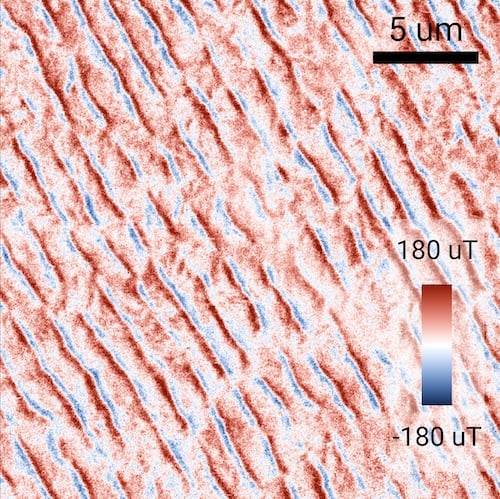
Antiferromagnets are a powerful platform for fundamental and applied magnetism. Their compensated spin structure produces negligible stray fields, making them robust against external perturbations and offering key advantages:
- Stability against magnetic field cross-talk
- Potential for high-density device integration
- Ultrafast spin dynamics in the terahertz regime
- Reduced energy consumption in switching processes
These properties make antiferromagnets highly attractive for next-generation memory and spintronic devices, where stability, speed, and energy efficiency are critical.
How to measure antiferromagnets?
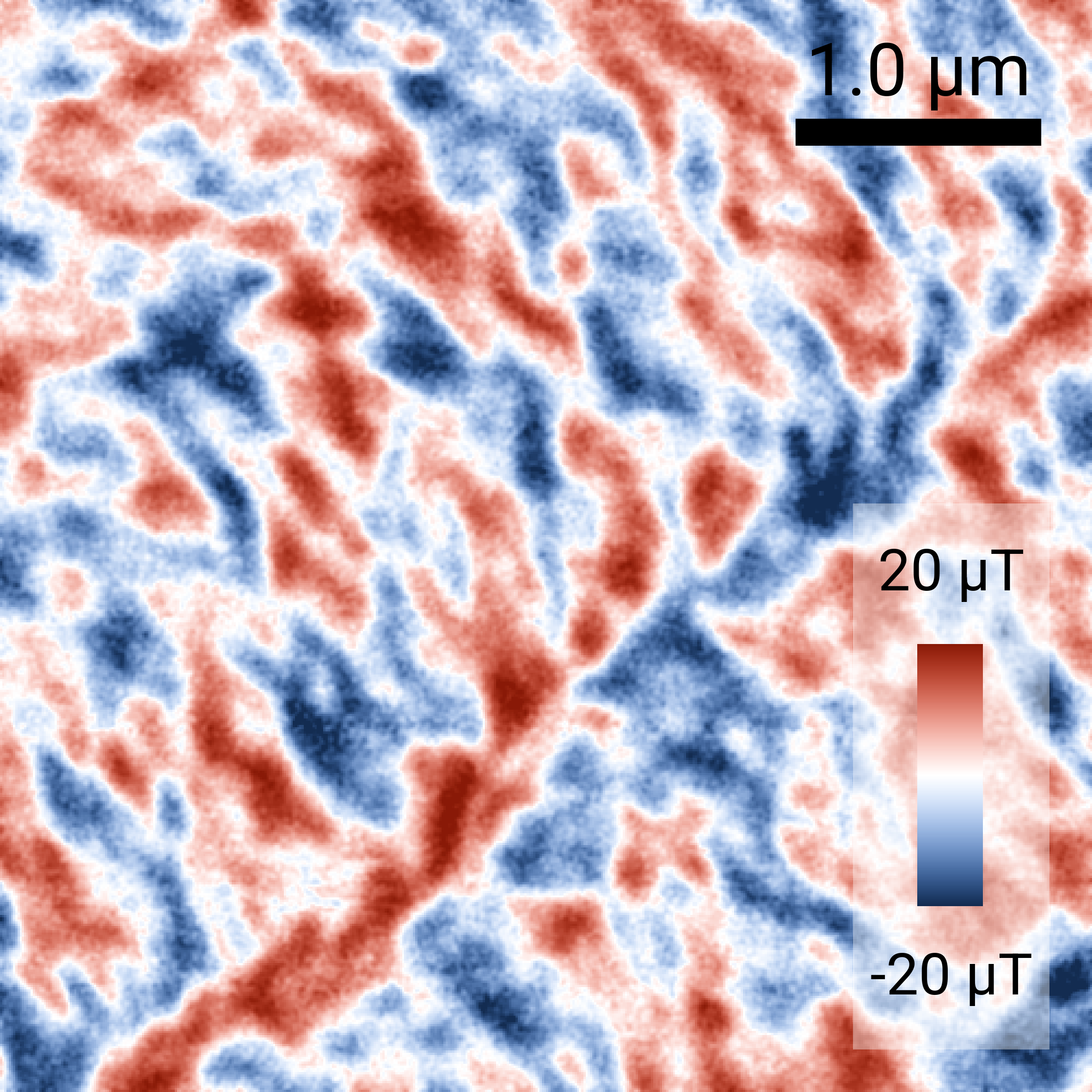
With the QSM scanning NV magnetometer, even the weak stray fields of antiferromagnets can be imaged efficiently and quantitatively. The NV Advanced Modes Extension enables scanning speeds up to 200 pixels/s, allowing large-area, high-resolution magnetic maps within hours. For very weak fields (<50 µT), pulsed ODMR and IsoB modes provide enhanced sensitivity and quantitative field characterization.
For these demanding measurements, QST Q7 or Q8 diamond probes deliver exceptional signal-to-noise ratio, ensuring optimal performance in low-field, compensated magnetic systems.