

QUANTUM COMPUTING
Room temperature qubits with NV centers
NV centers in diamond offer a natural two-level spin system that works as a high-quality qubit at room temperature. By selecting two sublevels of the NV⁻ spin states, we get long spin lifetimes and coherence times that make them excellent test platforms, accessible even to student researchers, with no need for cryogenic or ultra-high vacuum setups.
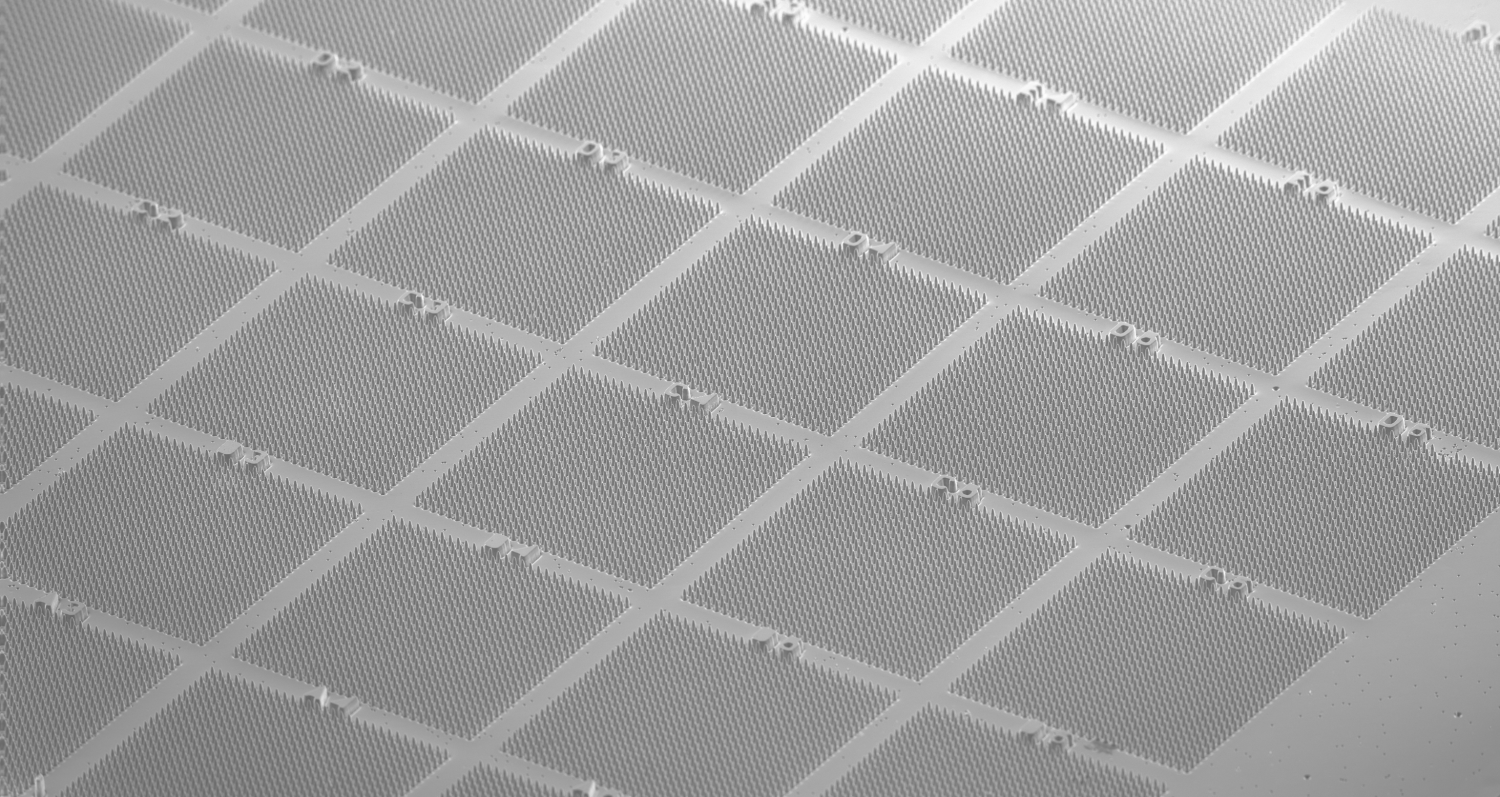
For quantum computing applications, QZabre offers deeper nitrogen implantation depths combined with optimized optical outcoupling structures, giving you better qubit fidelity out of the box. We also supply isotopically purified C12 diamond, or custom C13/C12 ratios, depending on your application.
Entangling two qubits within a single NV center
When using N15 implantation, the nitrogen nucleus carries a spin of I = ½, providing a second, independent qubit alongside the NV electron spin. These two qubits interact through the hyperfine coupling, a well-controlled interaction that can be used to implement conditional (2-qubit) gate operations.

The hyperfine interaction shifts the electron spin energy levels depending on the state of the nuclear spin, allowing us to selectively drive the electron spin conditioned on the nuclear spin state. This conditional control is the essential ingredient for entanglement and 2-qubit logic.
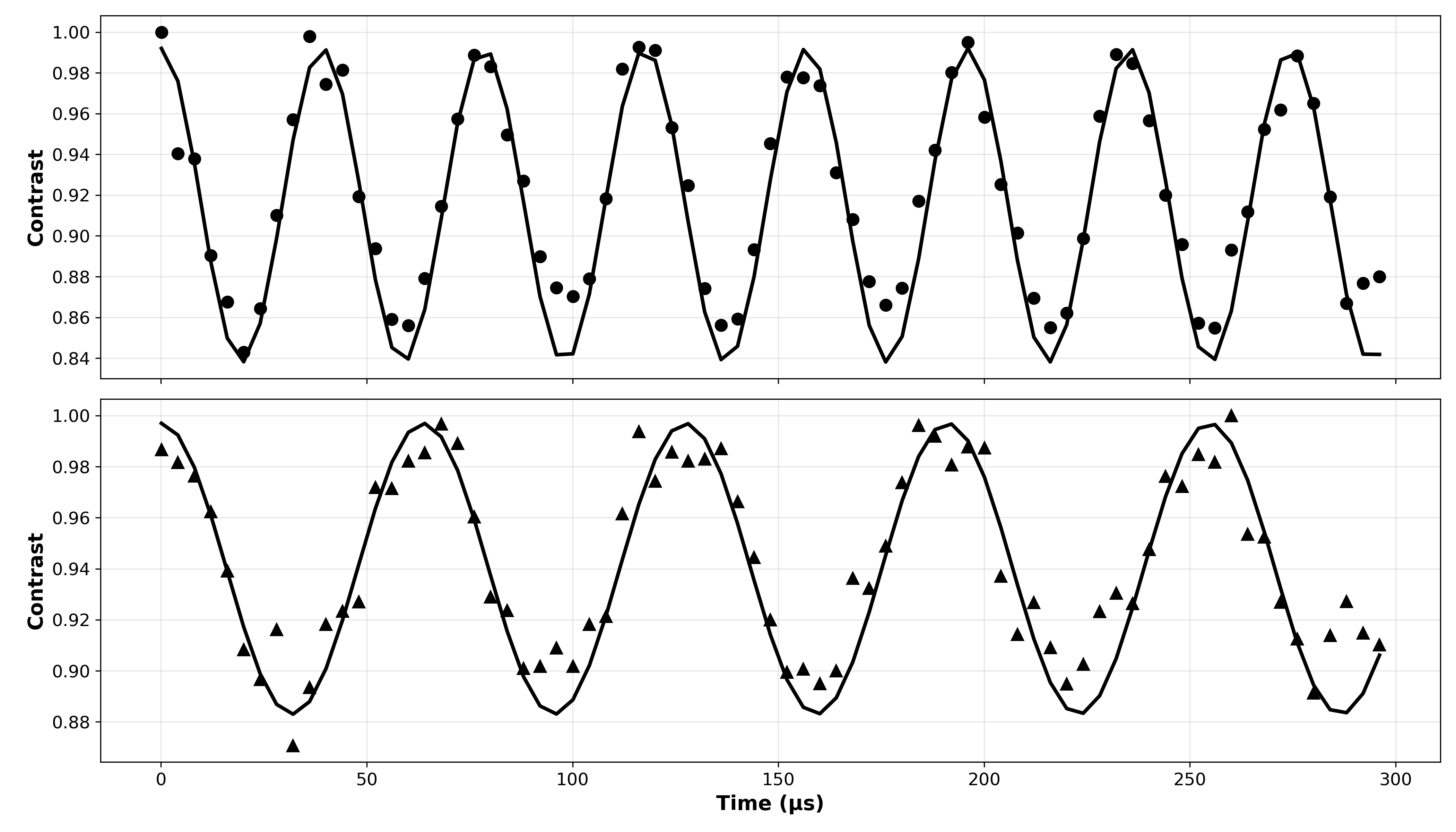
Using a QZabre Quantum Sensing Microscope (QSM), we demonstrated this directly: the two qubits are coupled, a Rabi experiment is performed on the nuclear qubit, and the result is read out via the electron spin, all in a single NV.
Longer coherence. Higher sensitivity.
The N15 nuclear spin has a significantly longer coherence time than the electron spin, making it valuable not just for computing, but for sensing too. By mapping the electron spin state onto the nuclear spin and reading it out repeatedly, we can implement a repetitive readout protocol that improves both measurement fidelity and sensitivity with a single NV center Barry et. al.
What you need to run these experiments
Driving both electron and nuclear spin qubits requires simultaneous control at GHz frequencies (electron spin) and MHz frequencies (nuclear spin), signals that are far apart in the spectrum. QZabre's QSM supports multiple arbitrary waveform generators (AWGs) in a single system, so this dual-frequency control is available out of the box, no custom assembly required.
For the longest coherence times, we recommend our high-T2 probes, purpose-built for quantum control experiments.